











 483
483
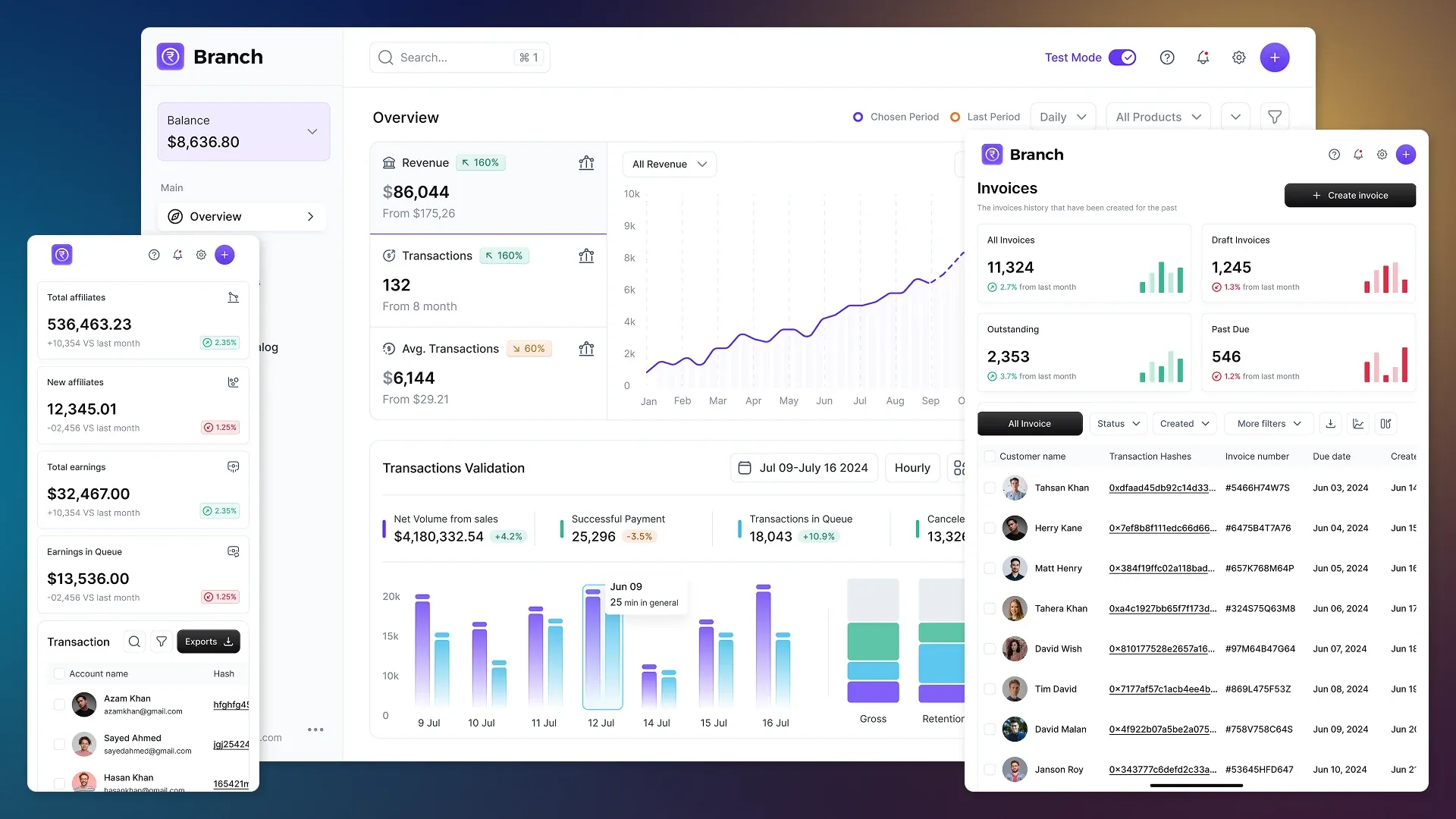
The development of technology requires changes from modern business. Today, it is difficult to imagine medium and large enterprises without a comprehensive resource management system. ERP combines all key business processes – from finance to production. It is like the "brain" of the company, which coordinates the work of all departments. However, like any complex system, ERP has its limitations. For example, its ability to adapt to new business challenges depends on the integration of innovative solutions. One of the most promising tools that can revolutionize business process management is blockchain technology.
Cryptonis Labs provides services for the integration of blockchain into ERP systems, opening up new opportunities for companies to increase transparency, security and efficiency.

How Blockchain Works with ERP
A blockchain is a decentralized, distributed ledger that records transactions in blocks. Each block is linked to the previous one using a cryptographic hash, making it almost impossible to forge or change the data.
Blockchain has long gone beyond the context of cryptocurrency and has become part of various business systems. With this technology, ERPs can offer a new level of transparency and security. Let's take a closer look at what blockchain is in ERP and the points of contact between them to understand how it will affect your business and what competitive advantages it will provide.
Decentralized data storage
All business process information, from orders to deliveries, can be recorded on the blockchain, providing a single source of truth. At the same time, information is stored not in one database, but on different network nodes.
Process automation
Smart contracts running on the blockchain simplify complex tasks. They can automate the execution of trades and contracts, reducing the need for manual processing.
Increased transparency in work
With data immutability, all business members can access up-to-date information at any time.
Enhanced security
Blockchain cryptographic algorithms protect data from unauthorized access and modification, meaning it cannot be tampered with or deleted.


Which Businesses Need to Integrate Blockchain into ERP
Blockchain integration in ERP will be useful if your business operates in an environment where:
- a large number of participants;
- high probability of fraud;
- transparency of operations is important;
- long supply chains that require traceability;
- big data;
- it is important to comply with regulatory requirements;
- new business models and products are being created.
Based on this, the implementation of blockchain technology in ERP is especially relevant for the following industries:
1. Logistics, pharmaceuticals, food industry and transport companies.
In such areas, blockchain allows you to track the movement of goods in real time, increasing the efficiency of logistics; automate document flow; ensure transparency of supply chains, accuracy and reliability of data.
2. Financial sphere.
Thanks to blockchain technology, the storage of transactions is becoming more secure, and mutual settlements are becoming faster and more secure.
3. Health care.
The use of blockchain in the ERP systems of medical institutions provides reliable storage and processing of large amounts of information, management of medical data, and protection of patient privacy.
4. Production
For the manufacturing industry, this is an effective way to improve quality control, inventory management, and ensure process transparency.
5. Power engineering.
In the energy sector, blockchain helps solve key problems of managing energy distribution, cost accounting, and optimizing consumption.

How ERP will change in the context of blockchain
Modern ERP systems, although a powerful tool for business management, often face problems with scaling, integration, and data security. Such issues are especially acute in companies with an extensive structure, where different departments use separate systems.
Challenges of traditional ERP:
- the diversity of systems makes it difficult to obtain reliable and up-to-date information for decision-making;
- integration of various systems requires significant resources and time;
- centralized ERP databases are vulnerable to cyberattacks.
Blockchain-based ERP development provides a new approach to data management in these systems. With properties such as decentralization, transparency, and immutability of data, blockchain solves these problems of traditional resource management systems.
Companies immediately feel the benefits of blockchain for ERP because they have the ability to:
- create a single digital space by combining all company data into a single network;
- improve cooperation with partners by creating transparent and efficient supply chains;
- accelerate decision-making with access to real-time data;
- reduce operating costs by automating processes and reducing risks.
Benefits of integrating blockchain into ERP systems
The introduction of blockchain in ERP significantly changes the approach to business management as a whole:
- minimizes the risk of manipulation and fraud, as all information is automatically stored in the blockchain and becomes available to all participants;
- eliminates the need for additional checks, because each record in the system is confirmed by consensus;
- reliably protects data in the system from internal failures and cyberattacks, thanks to decentralization and cryptography algorithms;
- allows transactions to be carried out almost instantly, which is very important for businesses that work in real time;
- reduces administrative costs thanks to smart contracts that automate routine operations;
- reduces data and transaction costs by avoiding intermediaries
- strengthens trusting relationships between partners and customers within a single platform for interaction between various participants in the business process, transparency of processes and transactions.

Future trends in blockchain and ERP
The benefits of blockchain in ERP are already significant for businesses, but the technology continues to evolve, and we expect the following trends in the coming years:
- Expansion of the scope of application - blockchain will find application in many more areas of business. Mass implementation in ERP systems will make this technology a standard for many industries.
- Creating decentralized ecosystems in which different companies and organizations can interact on equal terms.
- Regulatory support and stimulation of the development of a legal framework for the use of blockchain in corporate systems.
- Hybrid solutions - for example, the integration of blockchain with cloud technologies will allow for even more scalable and flexible resource management systems; the combination of artificial intelligence and blockchain - improve analytics and automate business processes. Creating platforms that allow blockchain solutions to easily integrate with other systems will improve interoperability.
By investing in blockchain today, companies not only gain a competitive advantage, but also ensure that they are ready for future changes in the business environment.
Stages of blockchain integration into ERP systems
- Analysis of business processes and determination of which ones will be automated using blockchain.
- Choosing the right blockchain platform.
- Writing code for smart contracts that will perform the necessary functions.
- Creating an interface between the blockchain and the ERP
- Thorough testing of the system to identify and fix errors.
- Implementation of the system in the production environment.
Technologies and tools for ERP development with blockchain integration
Creating ERP systems with blockchain integration requires the use of modern technologies and frameworks.
Blockchain Platforms
- Ethereum is a public platform known for its flexibility and wide ecosystem of smart contracts, thanks to its support for Solidity.
- Hyperledger Fabric is an enterprise platform with support for private blockchains.
- Corda is private, focused on the financial sector, but can be adapted for other industries.
- Hyperledger Sawtooth is an open-source platform for building modular and scalable blockchain solutions. Hyperledger Sawtooth offers a variety of consensus mechanisms and has a wide range of applications, including asset and supply chain management.
- Quorum is a private blockchain platform from ConsenSys, a company specializing in the development of applications based on the Ethereum blockchain. It is often used in the financial sector to create private blockchain networks with access control and privacy.
Hyperledger Sawtooth and Hyperledger Fabric are developed within the same project and pursue similar goals, but they have a number of significant differences. The key difference is that Sawtooth uses a Python virtual machine, providing flexibility in the development of smart contracts. Fabric uses the Chaincode programming language, which is specifically designed to execute smart contracts on the Fabric network.


Programming languages
- Solidity is the most common language for smart contract development on the Ethereum platform.
- Go is used in Hyperledger Fabric to create modular applications.
- JavaScript and TypeScript - for front-end and integration with the blockchain API.
- Java, C++, Python - for developing applications that interact with the blockchain.
Cloud services
- AWS Blockchain Templates makes it easy to set up blockchain networks.
- Microsoft Azure Blockchain Service provides a quick start for blockchain projects.
- Google Cloud Blockchain offers tools for monitoring and scaling blockchain solutions.
Database
- BigchainDB is a blockchain database for storing large amounts of data.
- IPFS is a decentralized file storage that integrates with blockchain.
Development tools
- Truffle is a framework for developing and testing smart contracts.
- Ganache is an environment for local testing of blockchain applications.
- Metamask is a browser plugin for interacting with blockchain networks.
Integration APIs
- Chainlink - to receive external data in blockchain smart contracts.
- Open Zeppelin is a library for securing smart contracts.
API tools
- js is a JavaScript library for interacting with the Ethereum blockchain.
- Hyperledger Fabric SDK - for working with Hyperledger Fabric.
Providing services for the integration of blockchain into ERP systems, our specialists use advanced tools - such as BigchainDB, Hedera Hashgraph, Corda and other powerful solutions, depending on the client's request.

Why should you start cooperating with Cryptonis Labs?
Blockchain opens up new opportunities for the development of enterprise resource management systems, and companies that implement it in their ERP systems gain a competitive advantage in the market. However, for the successful implementation of such projects, deep knowledge in the field of blockchain and experience in software development are required.
Cryptonis Labs is your reliable partner in the creation of ERP systems of any complexity. Our specialists have extensive experience in the development of software solutions for business, in particular, enterprise resource management systems and the integration of blockchain technologies into them. Each project is an individual approach, a deep understanding of the client's needs and the implementation of solutions that really work. Contact our experts if you are ready to learn more about how blockchain can transform your business.
FAQ
-
How Does Blockchain Improve ERP?
Blockchain integration with ERP helps automate transaction verification, reduce the human factor, and increase data accuracy. This allows the business to reduce the cost of administrative processes and speed up operations.
-
Do I need to change my existing ERP systems when integrating with blockchain?
Depending on the chosen approach and specifications, some components of the ERP system may need to be adapted or modified to integrate seamlessly with the blockchain. In some cases, you can use additional modules or APIs for integration.
-
What features of a resource management system can be improved with blockchain?
Blockchain can improve the functions of supply chain management, accounting, financial transactions, and contract management, in particular through smart contracts to automate the execution of transaction terms.
-
How do I determine if my business needs blockchain integration with ERP?
To do this, you need to assess the need to improve the security, transparency and efficiency of your processes. If your business operates with large amounts of data, requires automation of contractual terms, or has complex supply chains, blockchain integration makes sense.
-
What are the challenges of integrating blockchain with ERP systems?
Blockchain is a rather complex technology that requires deep knowledge. In addition, existing legislation and regulatory requirements must be taken into account. If you need to set up blockchain in ERP, contact only experienced specialists.
-
Are there alternatives to blockchain for ERP?
Yes, there are other technologies to ensure security and transparency in ERP systems – for example, centralized databases or traditional encryption methods. However, it is blockchain that provides unique advantages in the context of data distribution and protection from manipulation, which makes it one of the most effective solutions for many businesses.

